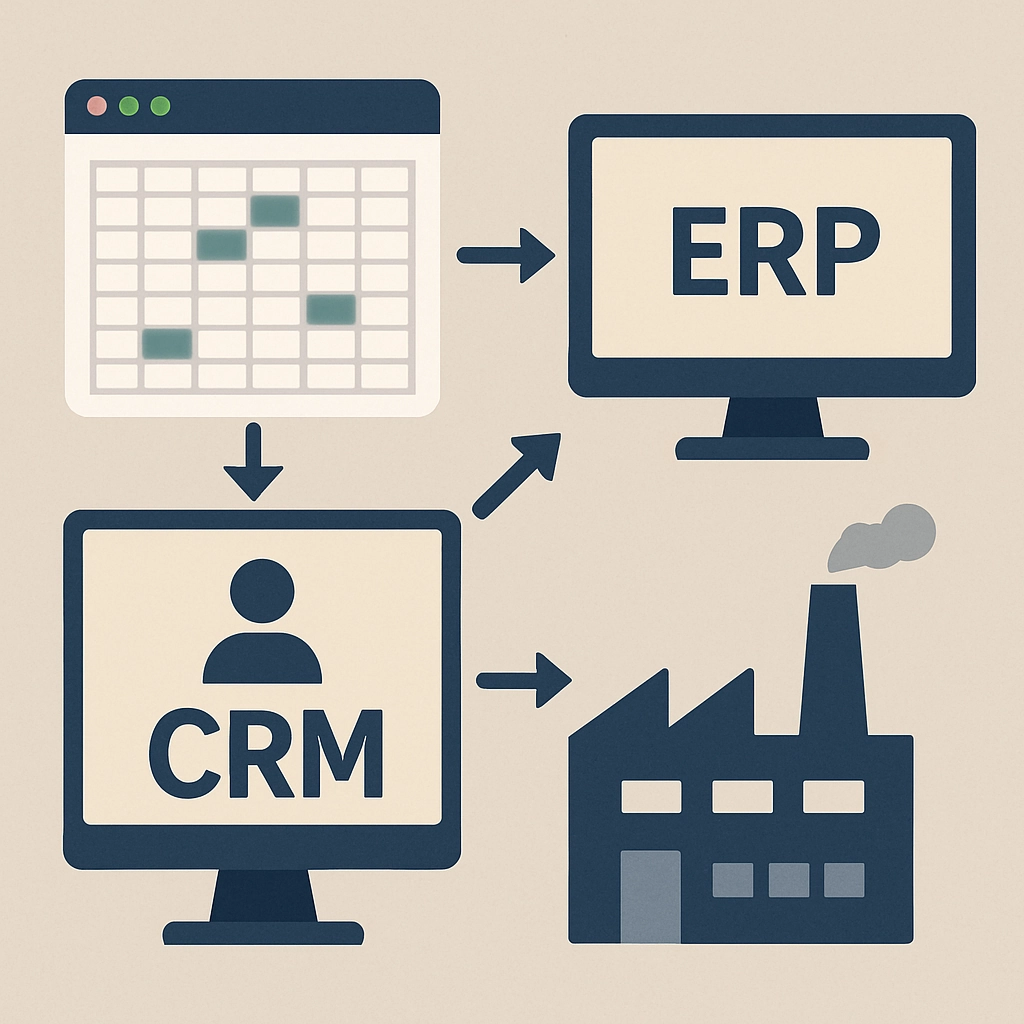
Starting Point: Excel Files and Different Realities
Imagine a mid-sized manufacturer in Bursa that sells through dealers. The sales team works with Excel files, ERP is used only for invoicing, and the warehouse keeps stock in a separate application. The result: each department has its own version of the “truth”.
Summary of Problems
- Visit and quotation records live in Excel; nobody is sure which file is up to date.
- Stock status is always “uncertain” in the eyes of the sales reps.
- Overdue receivables are not visible in the field, making risk management difficult.
- Management cannot see sales, stock and collection information together in a single view.
1. Step: Collecting Customers and Visits in CRM
In the first phase, a Bursa-focused CRM project was launched:
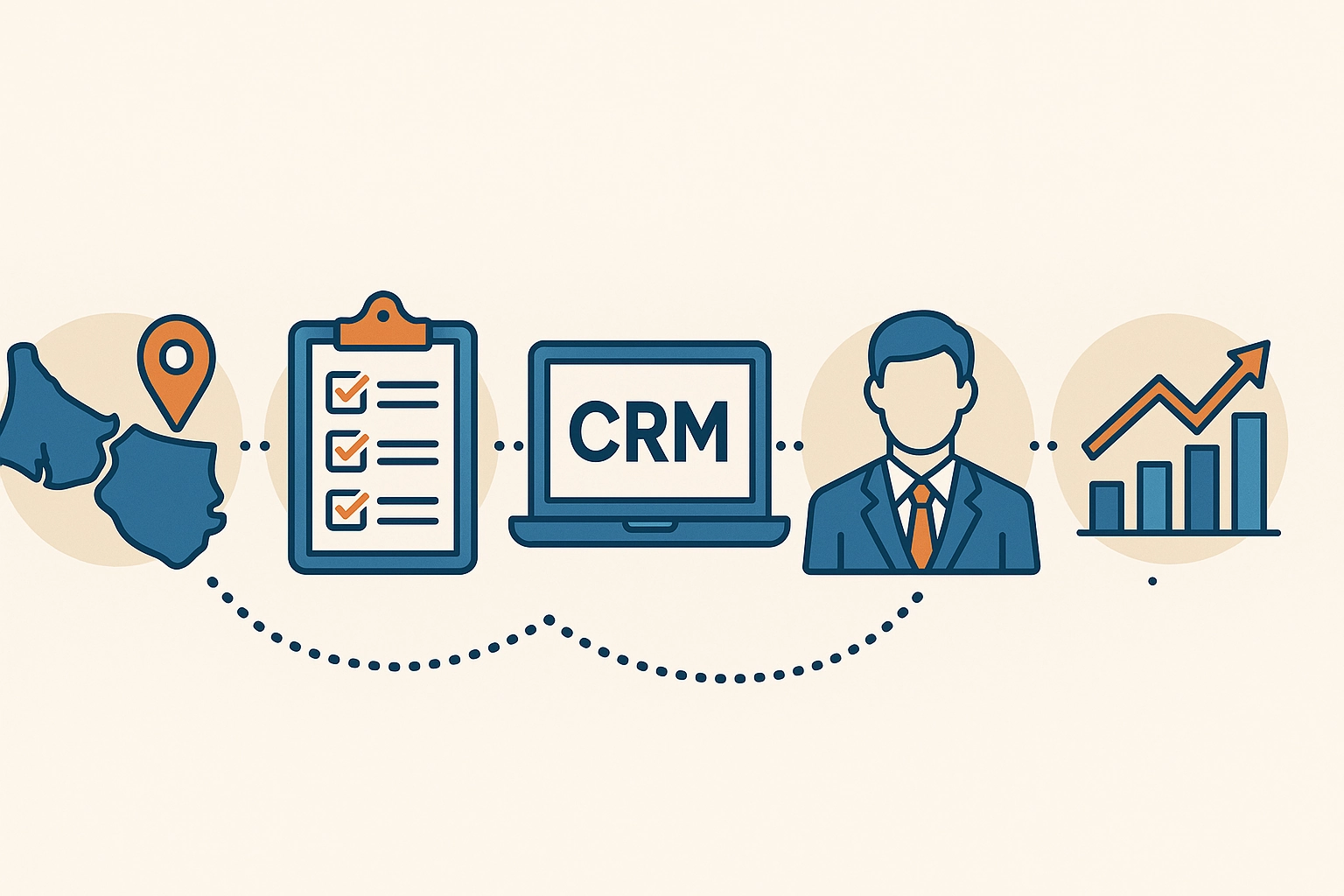
- All customer and prospect records were centralised in a single CRM.
- Weekly visit plans started to be created and followed inside CRM.
- Quotations and opportunities were logged in the system and Excel was completely abandoned.
- Quotation forms on the web site were connected directly into CRM.
Within the first two months, CRM adoption among the sales team rose above 80%.
2. Step: Clarifying Stock and Order Processes in ERP
In the second phase, the processes on the ERP side were reviewed:
- Stock cards and warehouse structure were simplified.
- The order → delivery note → invoice flow was standardised with clear document rules.
- Dedicated codes and reports were defined for returns and scrap so they could be tracked consistently.
This made core stock and shipment data more reliable for everyone.
3. Step: Integrating Bursa CRM and ERP
In the third phase, CRM and ERP started to talk to each other:
- Approved quotations in CRM were automatically transferred as orders into ERP.
- Shipment information from ERP was written back into CRM for each related opportunity.
- Overdue receivables and risk limits from ERP became visible on the CRM customer card.
Sales reps could now see both order status and the customer’s risk level from a single screen.
Tangible Gains in the First 6 Months
- Visit visibility: Monthly visit reports clarified coverage by region and dealer.
- Quotation conversion: Opportunity tracking revealed which products and regions were winning more.
- Stock errors: Standardised processes reduced wrong shipments and unnecessary returns.
- Collection tracking: Overdue receivables became visible in the field and communication between sales and finance improved.
Cultural Change for the Bursa Team
Beyond the technical improvements, there was also a cultural shift:
- Sales, warehouse and finance started to talk using shared dashboards instead of separate Excel files.
- The mindset moved from “my Excel is the most up to date” to “what does the system show right now?”.
- Management meetings became less about gut feeling and more about data-backed reports.
Conclusion: A Model Path for Companies in Bursa
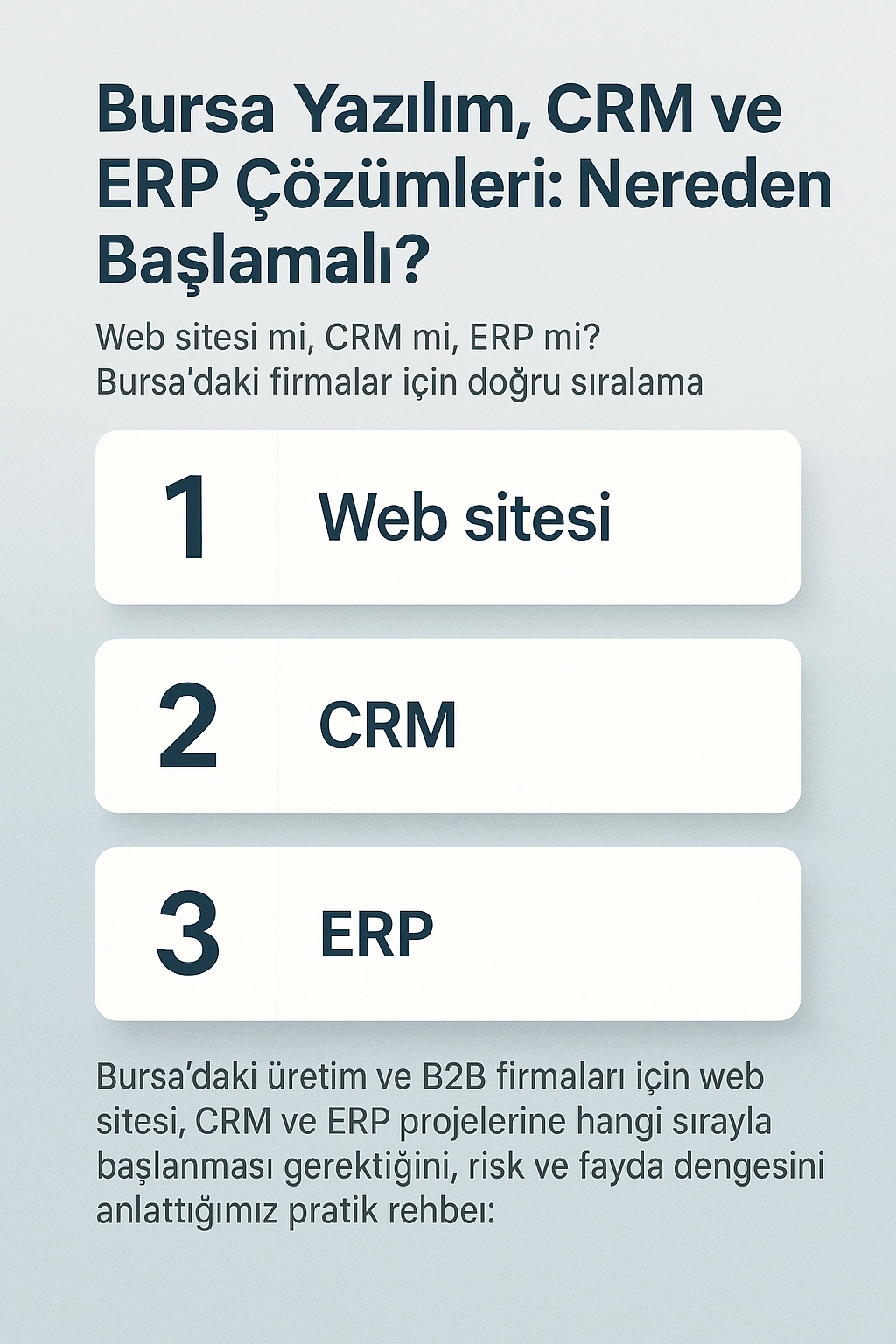
This case is a familiar story for many manufacturers in Bursa. With the right sequence and a lean scope, CRM + ERP integration delivers measurable gains for both field and office teams.
If you are planning a similar transformation in your own organisation, we can analyse your current processes together and define a realistic roadmap.