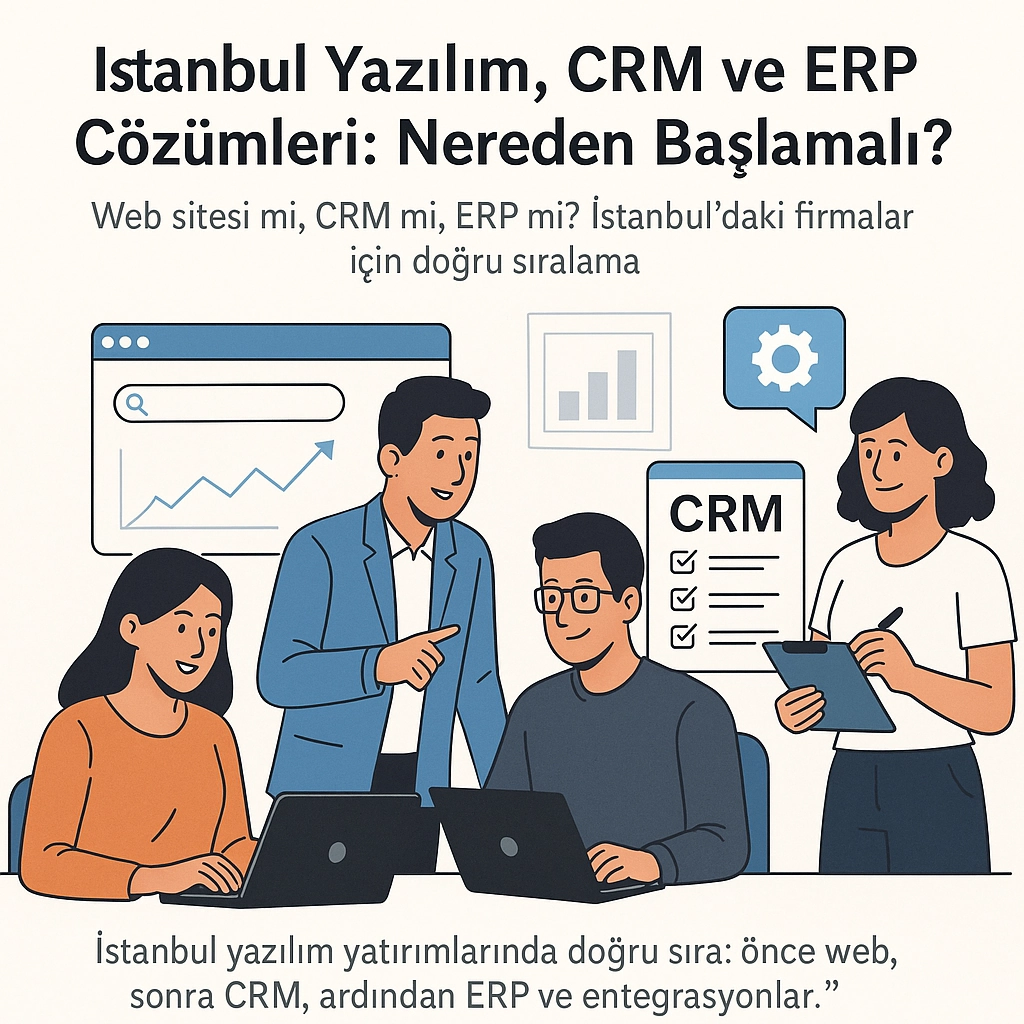
Imagine an Istanbul business offering three different services. Its website has one general “solutions” page and a contact form. Staff ask each prospect which service they need; after acceptance, delivery asks sales for the meeting notes. This illustrative case separates two needs: helping the visitor describe the requirement and turning that enquiry into organised work.
Remove ambiguity from the website
For each main service, explain who it serves, what problem it addresses and what information helps at the first meeting. Putting every offer on one page may leave the visitor without a useful decision path.
Preserve service interest and the source page in the enquiry. Separate information needed now from details to collect later. The initial aim is a clear response to a clear request.
Let workload reveal the CRM need
If one person reliably handles a small number of enquiries, a disciplined record and notification process may initially suffice. Multiple teams create greater needs for ownership, conversation history and reminders.
Use those signs to decide on CRM. Automatically transferring every form without rules for duplicates and poor-quality records can simply create more administration.
Design sales-to-delivery handover
Accepted scope, schedule, customer contact and exclusions should be understandable in a handover record. If delivery must interview sales each time, software alone is not the whole problem.
Agree information and responsibilities first. Then support the workflow through CRM, project management or an integration between existing tools. Choose the tool around the work.
Tie ERP scope to actual operations
ERP may be useful where contracts, purchasing, inventory, multiple companies or financial records sit in separate systems. A service firm does not automatically need every module from the outset.
Pilot one service from enquiry through quotation, delivery and payment tracking. Use gaps found in that process to plan the next phase.
For your Istanbul business, bring the service you most want to sell, the current form and an accepted quotation. Following their path into delivery helps define a useful first scope without unnecessary expansion.