Consider an illustrative textile production workflow in Bursa. The warehouse sees fabric rolls, production uses metres and sales orders finished pieces. If those records do not connect, new software simply carries the uncertainty further. ERP preparation should follow the material journey before deciding which modules to buy.
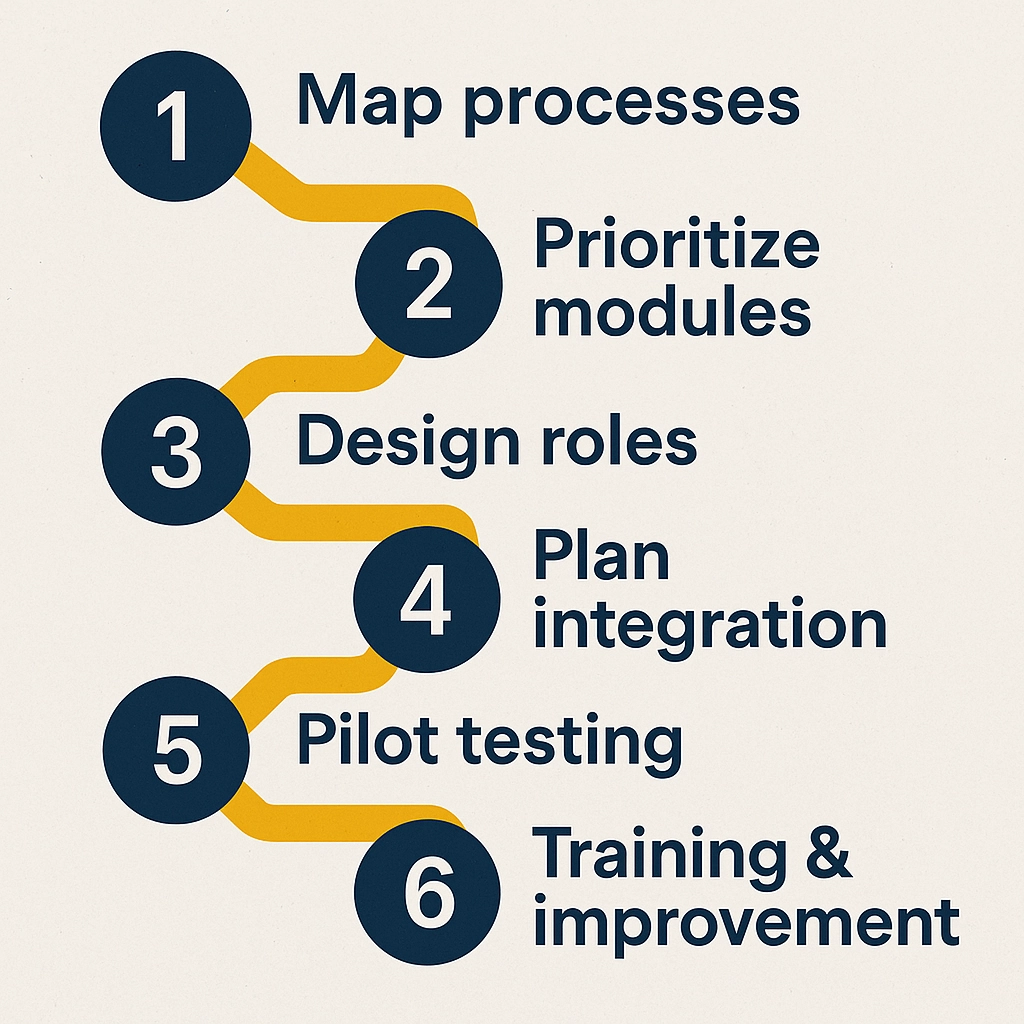
1. Trace one completed order
Choose an approved, anonymised order. Establish which fabric was used, when it entered production and which record supported dispatch. Places where staff must reconstruct events from memory become practical requirements.
2. Agree products and units
Rolls, metres and pieces do not necessarily have one universal conversion. Decide where units, colour, size and variants belong. Warehouse and production staff should agree on a working example before handing rules to developers.
3. Select where batch tracking is needed
Detailed traceability is not equally necessary for every record. Identify materials needing a batch reference, quality result or supplier reference. Define which stock and dispatch records would be investigated if a defect were discovered.
4. Separate plans from actual consumption
A work order can record planned quantities; closing it can capture actual consumption. Waste and rework need an agreed recording responsibility and reason, not just an additional software field.
5. Pilot one production area
Choose a bounded product group rather than moving the whole factory at once. Follow goods receipt, issue to production, finished output and dispatch. Correct missing product cards and wrong units before expanding.
6. Assess record consistency
Compare physical stock with the recorded balance. Check whether a dispatch can be traced to the relevant batch and a work order to its consumption. Use the pilot findings to complete training and support arrangements.
This is a planning scenario, not a reported customer outcome. For your Bursa operation, sample product cards, unit conversions and a work order provide a concrete basis for defining the first ERP phase.