How to choose the right CRM for sales and field teams in Bursa?
We summarize the key points to consider when choosing a CRM for Bursa-based manufacturing and B2B companies, with a practical checklist focused on field and dealer operations.
“In Bursa CRM projects, start small and prioritize the modules that field and dealer teams will actually use.”
Bursa, with its strong industrial base and dense B2B relationships, needs more than a classic “customer tracking” tool. Especially for automotive suppliers, food distribution and B2B service companies, a CRM should not just be a list of business cards, but a platform centered around field teams, dealers and operations.
The answers to these questions determine which modules are “must-have” in your Bursa CRM project.
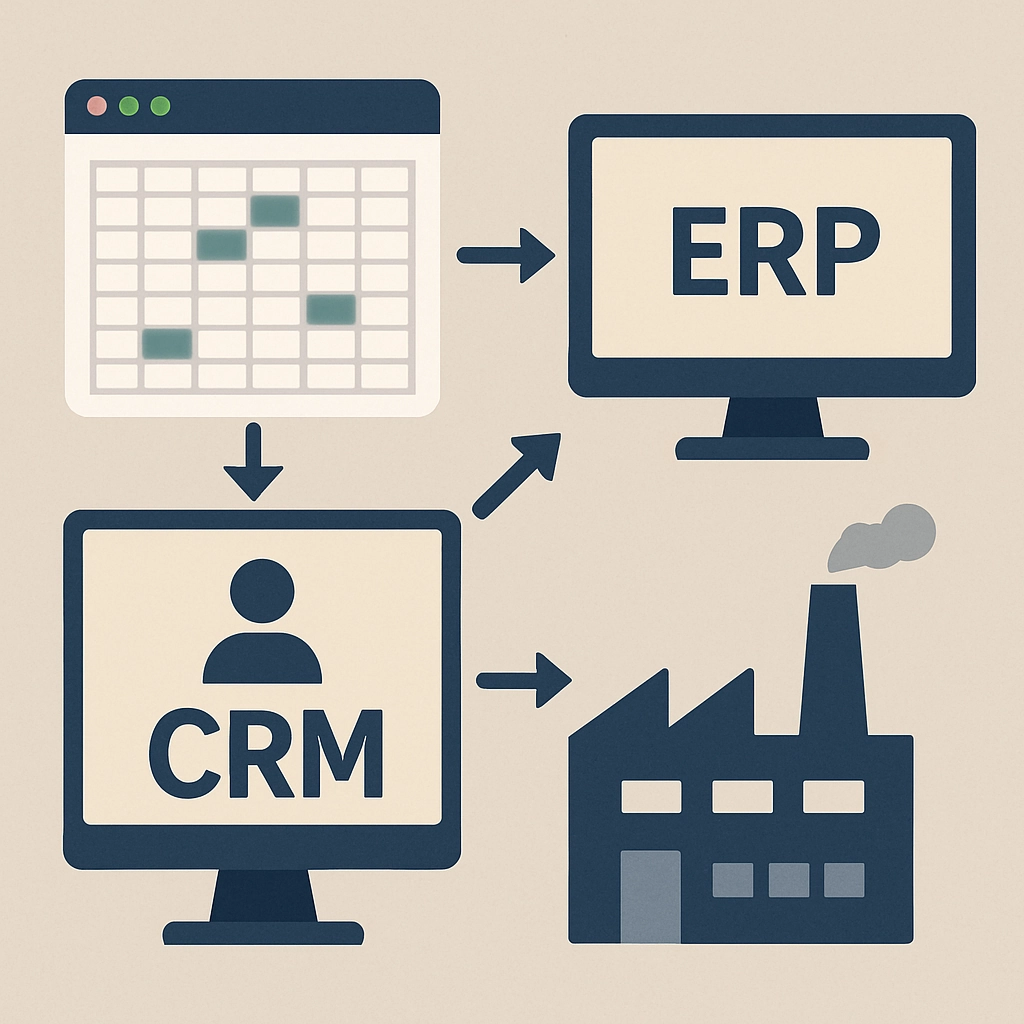
In manufacturing and distribution-oriented companies, the biggest problem is scattered Excel files and outdated records. When moving to CRM:
CRM projects that start with uncleaned data in Bursa generally experience a loss of active users within the first 6 months.
The real value of CRM appears when departments look at the same version of the truth:
In an integrated Bursa CRM solution, when a sales rep creates a new quotation, the customer’s risk status and past collection performance should be visible on the same screen.
Keep the first phase lean, and add campaigns, gift management and advanced reporting in a second phase. This significantly speeds up user adoption for teams in Bursa.
The right CRM choice is not only about a list of features, but about a roadmap aligned with the field, dealer and production reality in Bursa. First clarify your core needs, start small, and regularly measure both user adoption and impact on sales.
If you are planning a similar Bursa CRM project, we can map your current processes together and build a step-by-step roadmap.